Correct vs. Incorrect Discrete Trial Training Data Sheet
Created by Ahmed Salem
5.0
(1)Price:
$ 0.00
In Stock (1958)
Correct vs. Incorrect Discrete Trial Training Data Sheet
Elevate your Discrete Trial Training (DTT) sessions with our comprehensive Correct vs. Incorrect Discrete Trial Training Data Sheet. This tool is expertly designed for behavior analysts, therapists, and educators committed to delivering high-quality, data-driven ABA interventions. It simplifies the process of tracking and analyzing responses, providing a clear and efficient way to measure learner progress and adjust teaching strategies accordingly.
Key Features:
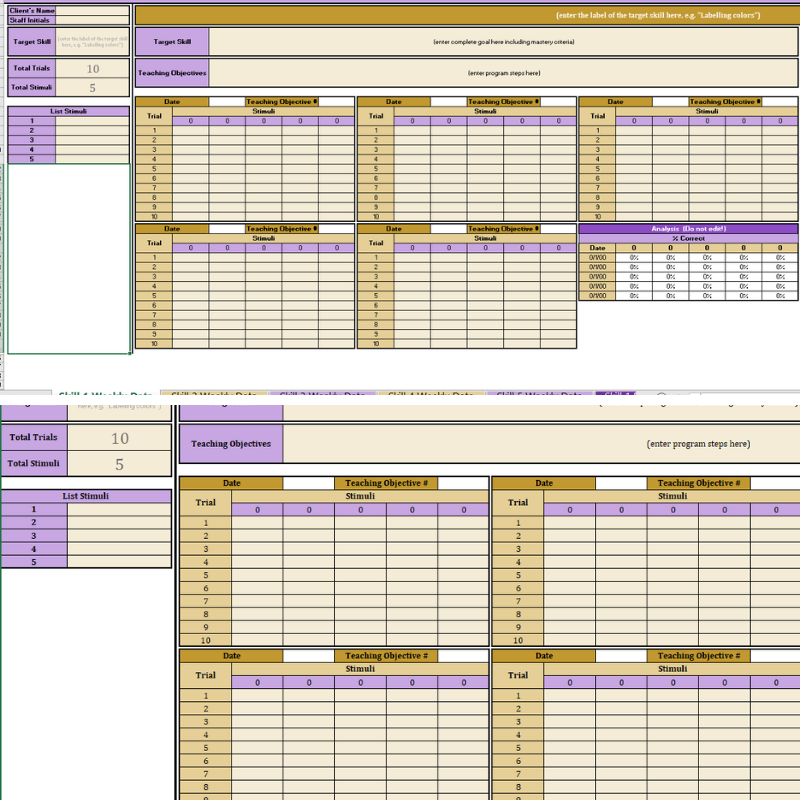
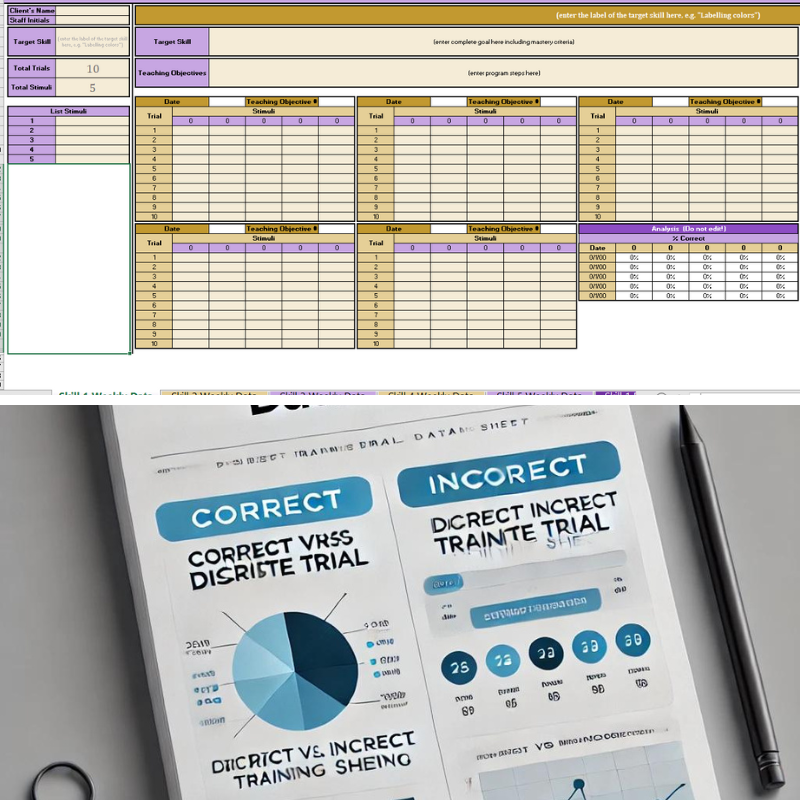
- Clear Categorization: Separate columns for recording correct and incorrect responses, allowing for easy data entry and quick analysis.
- Session Tracking: Detailed sections for logging session dates, times, and additional notes to provide context for each session.
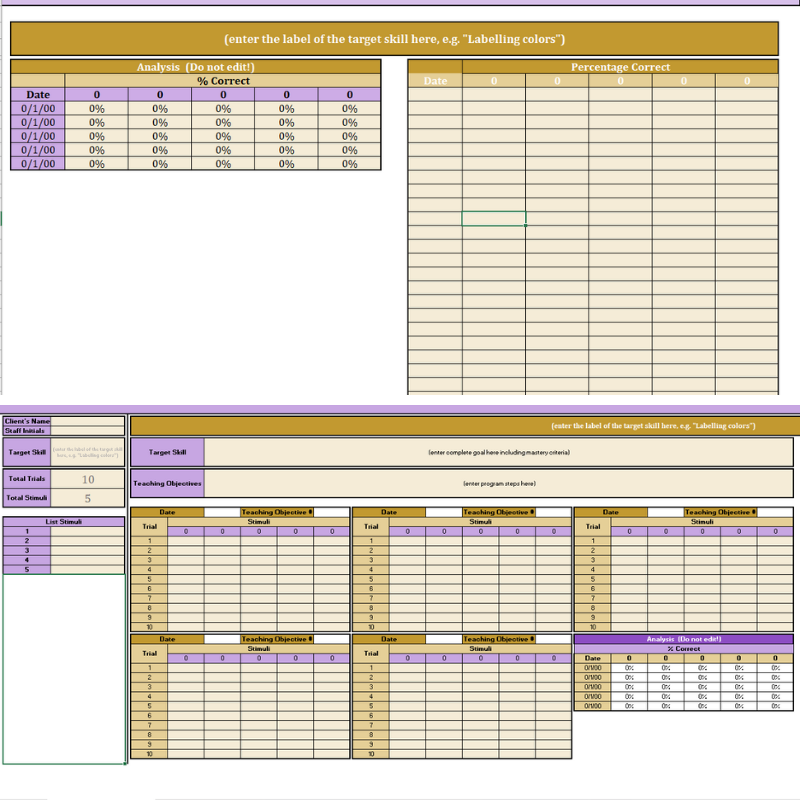
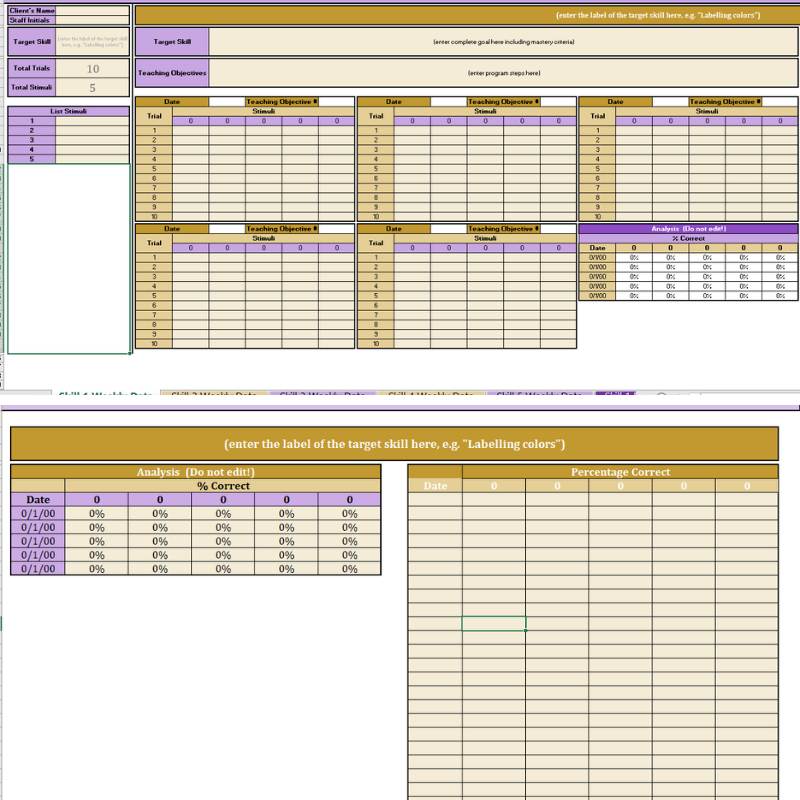
- Progress Monitoring: Visual aids such as graphs and charts to help track trends and patterns in learner responses over time.
- Easy to Use: Designed for quick and intuitive use in various settings, including clinics, schools, and home-based programs.
- Comprehensive Instructions: Step-by-step guidance on how to use the data sheet effectively, ensuring accurate and consistent data collection.
About Discrete Trial Training (DTT): Discrete Trial Training (DTT) is a structured teaching method within Applied Behavior Analysis (ABA) that is particularly effective for individuals with autism and other developmental disorders. DTT involves breaking down skills into smaller, manageable components and teaching each step of the skill through repeated trials. Each trial consists of an instruction, a response from the learner, and a consequence, such as reinforcement or corrective feedback.
Importance of Accurate Data Collection: Accurate data collection is crucial in DTT as it enables therapists to:
- Measure Progress: Track the acquisition of new skills and behaviors.
- Identify Trends: Observe patterns in learner responses to inform decision-making.
- Adjust Interventions: Modify teaching strategies based on data to enhance effectiveness.
- Communicate Results: Provide clear, evidence-based reports to parents, caregivers, and other stakeholders.
Example Uses:
- Monitoring Skill Acquisition: Track the learner’s progress in acquiring new skills over multiple sessions.
- Behavior Analysis: Identify patterns in responses that may indicate the need for adjusting teaching methods.
- Parent and Stakeholder Reporting: Provide clear, evidence-based reports to parents and other stakeholders about the learner’s progress.

Ahmed Salem
Certifications
No certificate to show
Experience
No awards to show